

What are the power requirements for a UPVC pipe extrusion line?
Aug 17, 2026
Leave a message
Hey there! I'm a supplier of UPVC Pipe Extrusion Lines, and today I want to chat about the power requirements for these awesome machines.
First off, let's understand what a UPVC pipe extrusion line does. It's a piece of equipment that takes raw UPVC materials and turns them into those pipes we see everywhere - in plumbing, construction, and other industries. But to make this magic happen, it needs a certain amount of power.
The power requirements for a UPVC pipe extrusion line can vary quite a bit depending on several factors. One of the main things is the size of the line. A larger extrusion line that can produce bigger pipes or work at a higher production rate will generally need more power. For instance, a small-scale UPVC pipe extrusion line that's used for making thin - walled pipes in a small workshop might have relatively lower power needs. On the other hand, a large industrial - scale line designed for high - volume production of thick - walled pipes will require a significant amount of power.
Another factor is the complexity of the line. Some UPVC pipe extrusion lines come with additional features like multiple extruders, advanced cooling systems, and high - precision control units. These extra features add to the power consumption. For example, if a line has multiple extruders working simultaneously to create multi - layer pipes, each extruder will draw power. And a sophisticated cooling system that uses powerful fans or water pumps to quickly cool the newly formed pipes also needs energy.
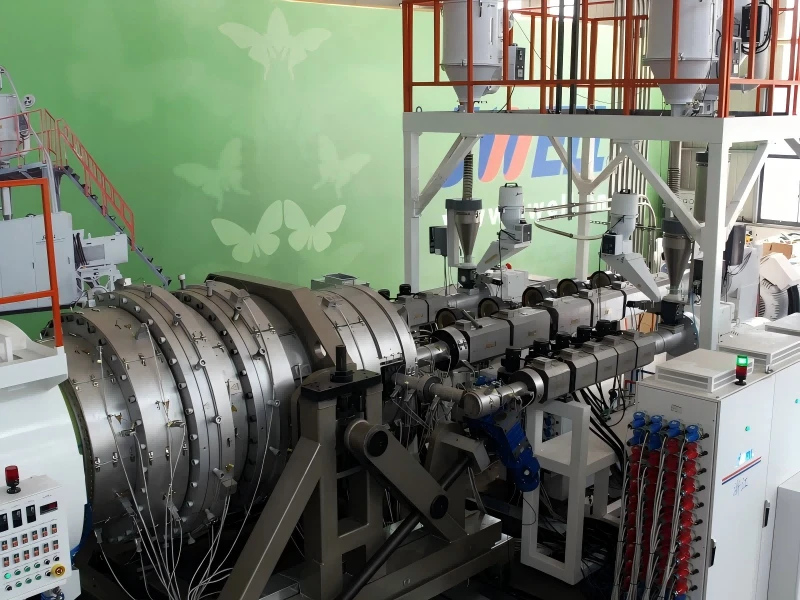

Let's break down the main power - consuming components in a UPVC pipe extrusion line.
Extruder
The extruder is the heart of the UPVC pipe extrusion line. It's responsible for melting the UPVC resin and pushing it through the die to form the pipe shape. The power needed for the extruder depends on its screw diameter and length, as well as the speed at which it operates. A larger screw diameter usually means more power is required because it has to move a greater volume of material. Also, if you want the extruder to run at a high speed to increase production, you'll need more power to drive the motor.
Cooling System
Once the pipe is formed, it needs to be cooled down quickly to set its shape. There are different types of cooling systems, such as air - cooling and water - cooling. Air - cooling systems use fans to blow air over the pipes. The power consumption of these fans depends on their size and the number of them. Water - cooling systems, on the other hand, use pumps to circulate water around the pipes. The pumps need power to operate, and the power required depends on the flow rate and pressure of the water.
Haul - off Unit
The haul - off unit is used to pull the newly formed pipe out of the extrusion die and through the rest of the line at a consistent speed. It usually consists of a motor and a set of rollers. The power of the motor in the haul - off unit depends on the size and weight of the pipe it needs to pull, as well as the pulling speed. If you're making large - diameter or thick - walled pipes, the haul - off unit will need more power to handle the extra weight and friction.
Cutting Unit
The cutting unit is responsible for cutting the continuous pipe into the desired lengths. It can be a saw - type or a blade - type cutter. The power needed for the cutting unit depends on the cutting method and the thickness of the pipe. A more powerful motor is required to cut through thick - walled pipes quickly and cleanly.
Now, let me give you some ballpark figures for power consumption. A basic small - scale UPVC pipe extrusion line might consume around 30 - 50 kilowatts (kW) of power. This kind of line is suitable for small businesses or demonstration purposes. For a medium - sized line that can produce a decent volume of pipes, the power consumption could range from 50 - 100 kW. And for large industrial - scale UPVC pipe extrusion lines, the power consumption can be 100 kW or more.
It's also important to consider the power supply quality. The UPVC pipe extrusion line needs a stable power supply to operate efficiently. Voltage fluctuations can cause problems with the equipment, such as inconsistent extrusion quality or damage to the electrical components. So, it's a good idea to have a proper power stabilization system in place.
If you're interested in other types of pipe extrusion lines, we also offer some great options. Check out our PE Insulation Pipe Extrusion Line, which is perfect for making pipes with insulation properties. Our Horizontal Type Single Wall/Double Wall Corrugated Pipe Machine can produce both single - wall and double - wall corrugated pipes. For those in need of multi - layer pipes, our Multi - layer PPR/PE Composite Pipe Extrusion Line is an excellent choice. And if you're in the medical industry, our Medical Tube Extrusion Line is designed to meet high - quality standards. We also have a PVC Four Pipes Extrusion Line that can produce multiple pipes at once, increasing productivity.
So, if you're thinking about investing in a UPVC pipe extrusion line or any of our other pipe extrusion equipment, reach out to us! We can provide you with detailed information about power requirements for specific models, as well as answers to any other questions you might have. Let's start a conversation and see how we can help you meet your pipe - making needs.
References
- "Plastics Extrusion Technology" by Hanser Publications. This book provides in - depth knowledge about the extrusion process and the technical aspects of extrusion lines, including power requirements.
- Industry reports on UPVC pipe manufacturing from leading market research firms. These reports often contain data on power consumption trends in the industry.